
Niajiri Launches Niajiri Match, a New Hiring Tool for African Employers

Niajiri Launches Niajiri Match, a New Hiring Tool for African Employers
Over eight years, Niajiri has grown into a workforce company with more than 72,000 registered jobseekers, alongside an upskilling curriculum, assessments, a CV builder, and recruitment partnerships with companies including CRDB Bank, Coca-Cola, Yas Tanzania, Kamal Group, Coop Bank, Mwanga Hakika Bank, and TIOB.
It was named Best EdTech Startup at the Eastern Africa Startup Awards in 2023 and was first selected into the Digital for Development (D4D) Hub’s Think Like an Investor programme in 2024. In 2026, Niajiri was selected into the cohort again, this time as one of only ten African startups.
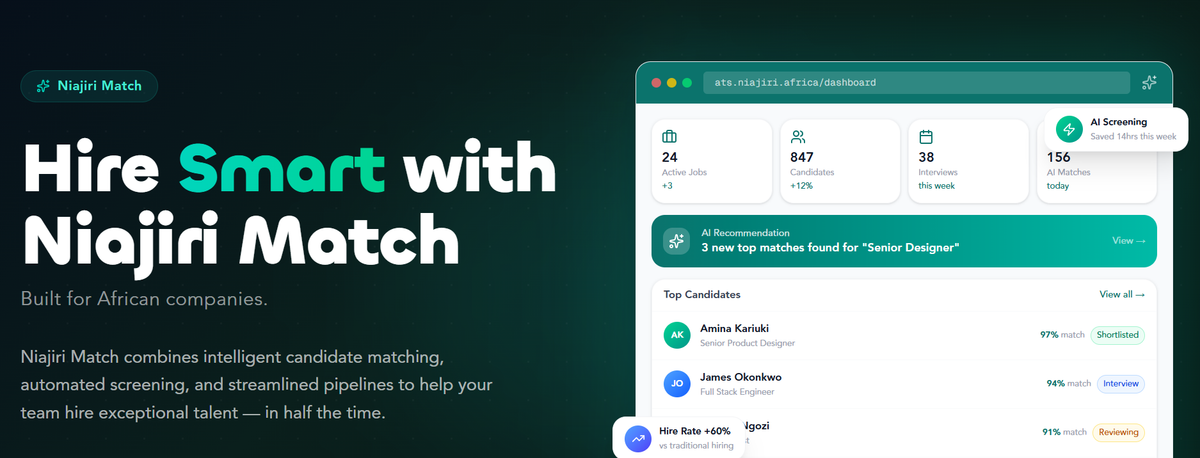
In March, the company launched Niajiri Match, a new product in its lineup designed specifically for the employer side of the market. It is priced from TZS 150,000 a month and is available as a web app. The markets the company is opening this year are Tanzania, Kenya, Burundi, and South Africa.
Atoms & Bits spoke with Founder-CEO Lillian Secelela Madeje and with Philemon Sengata, who leads digital growth at the company, on April 23. The conversation has been edited for length and clarity.
Reading time: 5 minutes.
What is Niajiri Match, and where does it sit in the wider Niajiri ecosystem?
Madeje: When people hear applicant tracking system (ATS), they imagine something complex, expensive, and built for corporates with a full HR department. So we took our time listening to our customers, from the big corporates to the one-man-show entrepreneur, when building Niajiri Match.
It is the recruitment side of what we do, packaged so that a business can sign up, post a role, run candidate matching, and manage the talent pipeline themselves. Interested employers can learn more at match.niajiri.africa.
The jobseeker side of our original platform stays as it is, with the upskilling curriculum, the assessments, the CV builder, and the Michongo job board.
Walk us through what an employer actually gets at $58 a month.
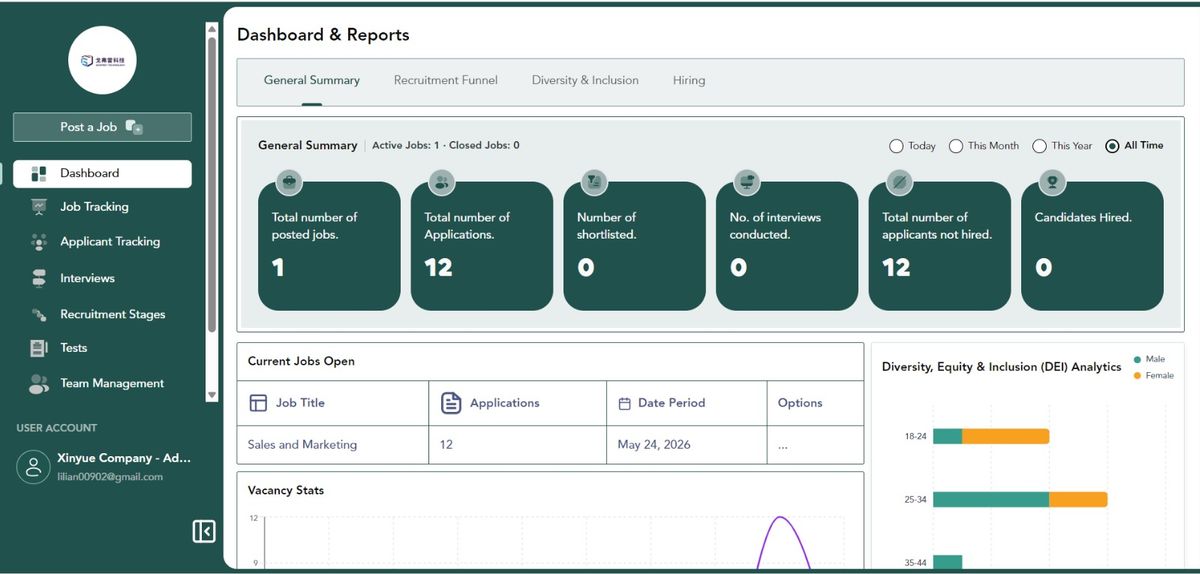
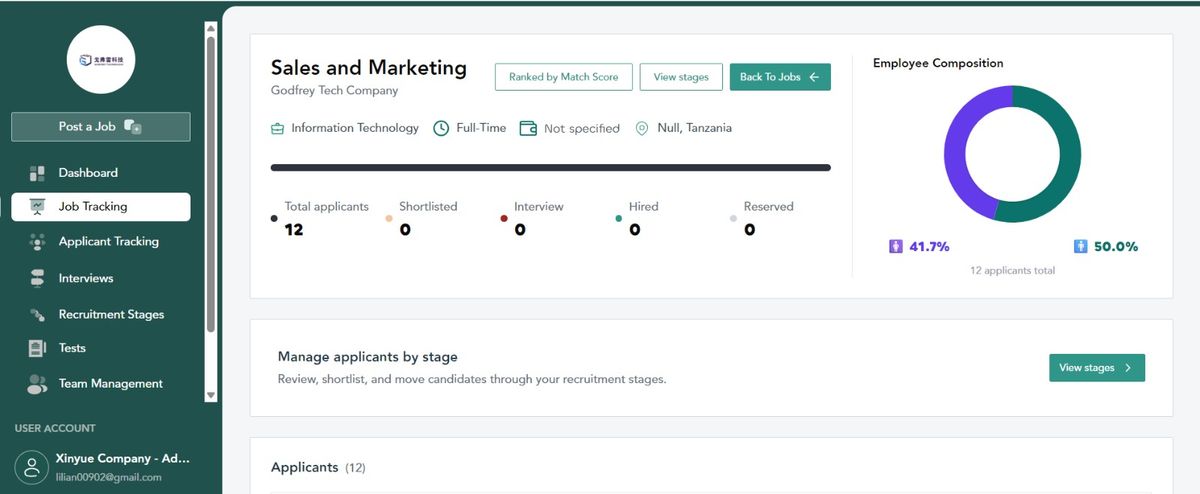
Sengata: Ten active job posts in a month, two admin seats, team collaboration, candidate matching against the existing Niajiri database, automated screening, and reporting.
Job posts also appear on the main Niajiri Africa platform. Higher tiers add more posts and seats, bulk SMS and email, advanced analytics, and social media promotion.
Verification services run as add-ons, from national ID and academic certificate checks to international background and criminal record searches. For an employer who does not want to run candidate searches themselves, we have a managed option where Niajiri handles the process and delivers a final shortlist of three top
Most Tanzanian startups and SMEs already hire in some way, even if it is informal. What is the case for using Niajiri Match?
Madeje: If you are an employer, your hiring process probably looks something like this. You post a role on social media or a job portal. CVs arrive in your email inbox or WhatsApp.
You screenshot the promising ones, save them to a folder, maybe add names to a spreadsheet, and then chaos. Who followed up with who? Who was shortlisted? Who is still waiting to hear back? This is how the best of talent ends up at the bottom of the pile.
Globally, the average employer takes 44 days and spends roughly $4,700 to fill a role, and 69% of jobseekers say they would not accept an offer from a company that did not respond during the application process.
The argument is that an employer using a dedicated tool, at a price they can actually afford, runs a more effective process than the WhatsApp-and-spreadsheet method most still use.
Who is the customer? You have said it is for everyone, but in practice?
Sengata: The whole range, from a company making its first hire to a corporate making its hundredth. The fastest fit is an SME with anywhere from ten to a few hundred staff, including startups, NGOs, development organisations, and franchise businesses.
We already work with larger companies such as CRDB Bank, Coca-Cola, Coop Bank, Insignia, Kamal Group, Yas Tanzania, and the Tanzania Institute of Bankers (TIOB), and they can also use Niajiri Match.
However, procurement cycles in large organisations tend to be longer. For faster, day-to-day onboarding, the SME segment typically moves much more quickly.
On the SME side, we are also serving growing businesses such as Redefine Africa, Shule Yetu, and Fraxen Consult. In Kenya, we work with a franchise business known as Ai-CHA, as well as Cedar Africa.
What problem are you actually solving for the SME owner you are aiming at?
Sengata: There are three things.
The first is too many unqualified CVs. Anyone can publish a job and anyone can apply, but the question is whether you get the right person for that specific role.
The second is long hiring cycles. SMEs and startups do not always have a proper HR function, so the founder ends up being the recruiter. A single role can take anywhere from three weeks to a month to fill. That is valuable productivity time the company is losing.
The third is that the global tools that solve these problems are expensive and not built for most African markets. They do not understand local hiring policies, work-permit rules, or how an SME here actually operates.
How is this different from posting on LinkedIn?
Sengata: As I hinted earlier, LinkedIn is more expensive and not localised for most African markets. Employers can pay anywhere from $200 to $1,000 per job slot per month, or around $10 per day, whereas Niajiri Match starts from $58 per month.
The difference is not just cost but also relevance and accessibility for local hiring needs.
The other piece is distribution.
While global tools rely mainly on algorithm-driven notifications, we go a step further by building customized recruitment campaigns for each role. These campaigns are amplified across our channels, including a WhatsApp community of more than 150,000 members and a combined audience of over 50,000 across Instagram, LinkedIn, X, and Facebook, ensuring roles reach highly relevant, active jobseekers.
Sign-up requires company tax verification. Why?
Sengata: This is part of our standard KYC process. We confirm that a company is properly registered before granting access, which helps protect jobseekers on the platform.
As we expand, we are integrating with verification systems across multiple African markets to ensure the same level of trust and compliance.
What changes for jobseekers who have been using the platform?
Madeje: Nothing changes for jobseekers. The original platform stays. Niajiri Match runs alongside it on the employer side, and the two feed each other.
A bigger employer base means more jobs flowing through to the candidates already on the consumer platform.
The product was built in-house. What does the team look like and what is next?
Sengata: Yes, the system was built in-house by our engineering team. Our current focus is to help African businesses grow and compete for top talent.
In a world where hiring is everything, the winners will be the companies that move faster, stay organized, and reach the right candidates at exactly the right moment.
Click here to start using Niajiri Match.

![This Week in Tanzanian Tech and Finance [April 13-19, 2026]](https://cdn.sanity.io/images/y15xx98w/production/cc27d36191c943661b0bc7e1aa2d7819adc8db9f-1600x900.png?rect=125,0,1350,900&w=600&h=400)