
FUNGUO Has Committed $2.65 Million to 74 Startups Since 2021
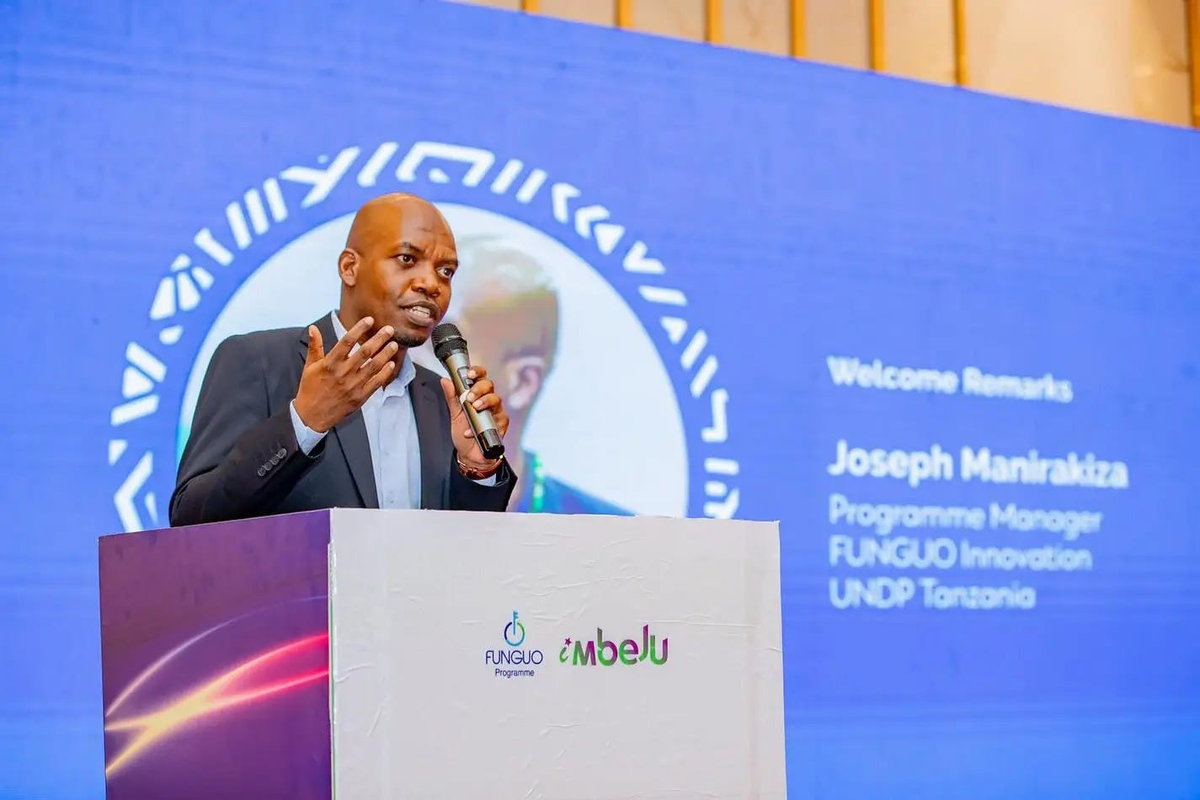
Exclusive interview with UNDP's Joseph Manirakiza
Got a health innovation? Apply now for IIH’s Product Development Partnership (PDP). #ad
First, Some Context
When Tanzania’s innovation ecosystem faced a funding gap in 2021, the Funguo Innovation Programme stepped in with a different model. Instead of choosing between grants and loans, the programme offers “catalytic funding”, aka risk-free capital designed specifically to make startups and SMEs investor-ready.
Three years later, FUNGUO has deployed TZS 6.5 billion to 74 ventures and unlocked four times that amount in follow-on funding.
Joseph Evarist Manirakiza manages the programme, which is backed by the European Union, UK’s FCDO, and Finland’s government, with UNDP Tanzania as implementing partner. The ecosystem knows him as “JOE.”
Here is our 15-minute interview originally published in Atoms & Bits Magazine (Special Edition October 2025).
Reading time: 10 minutes.
AnB: What is FUNGUO?
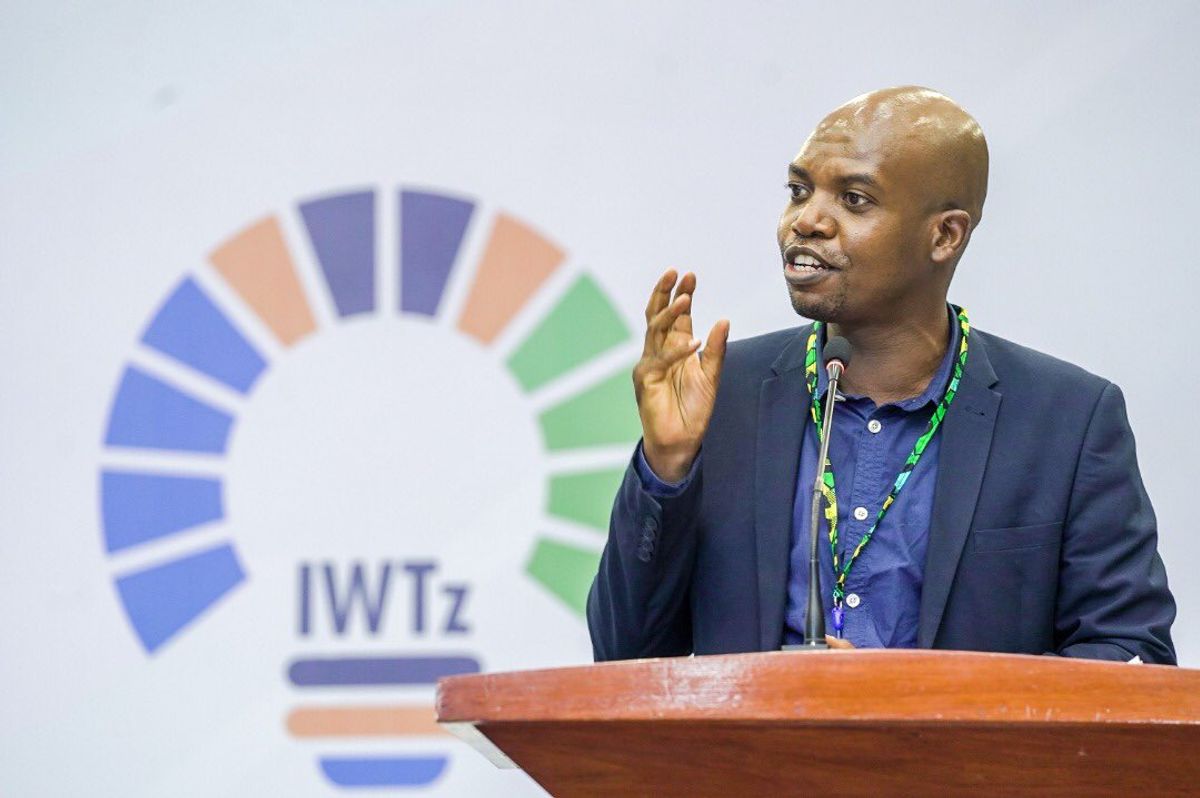
JOE: FUNGUO means “keys” in Swahili. The name reflects our purpose of unlocking potential for Tanzanian startups.
The programme came from a real need. When the UKaid-funded Human Development Innovation Programme ended, the ecosystem recognized we couldn’t afford to lose that momentum. Broader consultations led to this multi-partner initiative. We’re co-funded by the European Union through the Business Environment, Growth and Innovation Programme, the UK’s FCDO through African Technology & Innovation Partnerships, and Finland’s government. UNDP Tanzania implements.
This structure brings different perspectives and expertise. It’s not just about pooling money.
Where does FUNGUO fit in the startup ecosystem?
We work in what people call the “missing middle” - the space between early-stage incubation and larger-scale investment where promising ventures tend to stall.
Our role is catalytic. We bridge critical funding gaps for scalable, impact-driven startups that struggle to access suitable capital. We focus on building a strong pipeline of investment-ready ventures that can attract follow-on financing from larger investors and development partners.
Beyond financing, FUNGUO works with innovation hubs, government agencies, financial institutions, and academia to strengthen the overall support system and advocate for better policy. This integrated approach allows us to deploy funding and nurture a more resilient innovation ecosystem.
The word “catalytic” is intentional. We provide risk-free capital specifically designed to make startups investor-ready. A startup might use our funding to hire experienced staff, improve its business model, enhance its financial systems to meet investors’ standards. Always with the goal of preparing them for private capital, never replacing it.
You operate under three pillars. How does that work?
Innovation support often focuses narrowly on funding. We recognized early that sustainable impact requires a systems approach.
Our first pillar is Innovation Financing - catalytic investments complemented with targeted technical assistance to de-risk ventures and help them attract follow-on funding.
The second pillar is Innovation Service Delivery. We collaborate with innovation hubs, incubators, accelerators, and business development service providers to produce more investor-ready startups. These Enterprise Support Organizations are the backbone of the ecosystem. We call them “catalysts for growth” in the ESO Scoping study report we co-authored with Deloitte.
The third pillar is Enabling Environment. We work with policymakers to promote innovation-friendly policies and regulations through strategic platforms and initiatives aimed at improving the business environment for innovators and startups.
Since 2021, you’ve received over 2,700 applications. What have you achieved?
The numbers: we’ve reached over 2,700 startups and MSMEs across four calls for applications. We committed funding to 74 competitively selected ventures. Close to 60% of funded startups fall under “green” or “climate-smart” businesses. Around 40% are in agribusiness and close to 70% are either tech or tech-enabled businesses.
45% of funded startups have grown their revenue by over 50%. The remaining 55% have grown between 10 and 50%. 73% reported expanding to new local markets, including 26% who have gone international. FUNGUO investees have sustained or created over 10,000 jobs for Tanzanian youth.
For unlocking capital, over 65% of startups in the first three cohorts have raised additional funding since FUNGUO support. The unlocked funding exceeds four times the catalytic funding we provided. 67% of funded startups raised additional grants and 32% raised equity. Of total additional capital unlocked, equity takes 75%, followed by grants at 19% and debt at 6%.
These numbers tell us that catalytic funding works.
But achievements go beyond individual companies and financial metrics. We supported the Capital Markets and Securities Authority in drafting and launching Tanzania’s first Crowdfunding Guidelines. We have the first crowdfunding platform licensed under the guidelines as one investee from the fourth cohort: CashMe Tanzania. We contributed to the National Innovation Framework through COSTECH and championed the establishment of the Tanzania Hubs Network, which strengthens coordination and peer learning among enterprise support organizations.
We work with COSTECH and VODACOM Tanzania to sustain and scale Innovation Week Tanzania, the largest Tanzanian innovation ecosystem platform. The 11th edition was in May this year.
What other initiatives is FUNGUO championing?
For pipeline development, we established the #YouthIgnite Student Founders Fellowship to support university students who have already started businesses. The goal: enable them to graduate with their own jobs and employ their peers, rather than joining the long job-hunting queues.
In the first pilot we worked with 10 universities, supported their innovation hubs and hub managers to better support student founders. 1,300 student entrepreneurs responded to the first call, 300 were selected for ideathons, 30 progressed to bootcamp, and 20 startups emerged as winners of seed cash and technical support. 18 of these businesses are still running and generating revenues. The model works. The plan is to refine this initiative and scale it to all universities in Tanzania.
FUNGUO is seen as mostly focusing on urban centres, especially Dar es Salaam, not rural areas. The Finland-funded #GreenCatalyst Initiative is about to change that. It catalyzes innovation and entrepreneurship in the forestry value chain by identifying and supporting promising startups and MSMEs in Iringa, Njombe, Ruvuma and Lindi, complementing another Finland-supported larger initiative, the Forestry, Land Use, and Value Chains Development in Tanzania project.
Give us an overview of FUNGUO’s sectoral distribution, geographic reach, and gender focus.
FUNGUO is sector-agnostic by design because we wanted to support promising innovative impact-driven startups across the board. However, we’re seeing a gradual slight dominance of startups in agribusiness, with close to 40% of the portfolio in this category. This includes sustainable farming and agritech, supply chain optimization. The other emerging sector is Climate & Environment, with close to 35% of the portfolio representing waste management and circular economy, renewable energy. Financial inclusion is also upcoming, dominated by financial technology digital payments and alternative lending. We’re also seeing startups within Digital Marketplaces and Shared Economy, Education & Skills Development, Health & Healthcare categories.
Geographically, FUNGUO investees are spread across 13 regions in Tanzania, including Zanzibar. Dar es Salaam leads with 54% of the portfolio, followed by Mwanza at 14% and Morogoro at 12%. More work needs to be done to grow the startup ecosystem beyond Dar es Salaam. The #GreenCatalyst initiative is focused on the Southern Highlands Zone.
Gender-wise, we need to do a much better job. The target was to have at least 40% of the portfolio made of women-founded or women-led startups, but we haven’t got there yet. We’re still slightly below 30%. Setting quotas alone doesn’t solve the problem. Despite targeted outreach and enhanced spotlight of women-led investees, the challenge persists.
Last year we had an initiative focused on spotlighting the challenges and opportunities of women leading startups, with FUNGUO investees as case studies. This culminated in a mini documentary “Beyond the Hurdles” which showcased great achievements of women entrepreneurs in our portfolio despite all of them facing systemic barriers. We’re still exploring other avenues to increase the number of women-led businesses in our portfolio, potentially including targeted funding windows.
You coordinate initiatives like Innovation Week Tanzania (IWTz) and the Research, Innovation and Entrepreneurship Partnership (RIEP). Why invest in these platforms?
Innovation doesn’t happen in isolation. Entrepreneurs need to connect with investors, learn from each other, access mentorship, understand policy developments. Platforms like IWTz, which features the “Future Ready Summit” (FRS) in partnership with Vodacom, the Tanzania Annual ICT Conference by the ICT Commission, Sahara Sparks by Sahara Ventures, the Science, Technology and Innovation Conference & Exhibition by COSTECH, and more recently the Tanzania Startup Week by the Tanzania Startup Association, create those crucial connections.
The Research, Innovation and Entrepreneurship Partnership is particularly exciting. It’s a UK-India-East Africa initiative promoting cross-border collaboration among academic institutions, incubators, and startups. Tanzania has much to learn from and contribute to the global innovation conversation.
Last year, with support from FCDO’s East Africa Research and Innovation Hub, we ran a student hackathon dubbed “Reimagining Innovation for Sustainable Ecosystems Through Industry 4.0” which involved students and faculty from Kenya, Tanzania and India. The shortlisted teams pitched at Kenya National Innovation Week in Nairobi, and winning teams were sponsored to spend two weeks at Indian Institute of Technology Madras in Chennai, India, engaging in various activities and witnessing how startups are supported from an academic environment.
We also convened in Dar es Salaam, in partnership with COSTECH and UDSM, a Faculty Exchange Programme under the theme “Bridging Borders for Innovation: Unlocking Research Impact through Technology Transfer and Commercialization”. This brought together 25 universities from Kenya, Tanzania, UK and India (virtually), Kenya National Innovation Agency and the South African Technology Innovation Agency to facilitate cross-border knowledge exchange and learn from each other on both successes and challenges in the innovation-to-commercialization journey.
These platforms also open up the Tanzanian Innovation Ecosystem to the world. Two key highlights from this year’s IWTz2025 included hosting the President of Finland, H.E. Alexander Stubb, who officially launched FUNGUO’s #GreenCatalyst initiative, and having former Chief Business Officer of Google X, Mo Gawdat, give a keynote titled “Rewriting Tomorrow: AI for Good, Growth, & Global Change”.
Looking at the broader picture, what would you change about Tanzania’s innovation support ecosystem?
Four priorities stand out.
First, improve business education at secondary and tertiary levels, and support entrepreneurship initiatives. Too many entrepreneurs lack basic knowledge about financial management and customer development. Our #YouthIgnite initiative in universities is a start, but we need systemic change. Gone are the days where graduates would leave school and transition straight into jobs. There are not enough jobs for every young person. Enabling them to create their own jobs through business looks like a viable path.
Second, strengthen intellectual property protection and infrastructure. Innovators need confidence their ideas have legal protection. There’s a lot of research at our universities that could translate into products and services if there was proper IP infrastructure, adequate IP policies and financing.
Third, a legal framework that recognizes the uniqueness of startups and incentivizes investment in them. The progress on Tanzania Startup Policy is a great step in the right direction.
Fourth, increase efforts in startup pipeline development and venture building, including more structured ideation, incubation and acceleration programs, blended catalytic funding and more diverse financial instruments that bridge our offerings and commercial investment. The gap between catalytic funding and Series A is still too wide.
Better coordination among ecosystem support organizations would help enormously. That’s why initiatives like the Tanzania Hubs Network matter - reducing duplication and strengthening collective impact, while facilitating peer learning.
FUNGUO works with multiple partners. How do you manage these relationships?
By design FUNGUO is a multi-partner initiative, supported by multiple funders. Each funder brings unique priorities and expertise but collectively we’re driven by the common goal of supporting the growth of Tanzania’s innovation ecosystem.
But we don’t only work with funders. We work closely with government ministries - Education, Science and Technology through COSTECH, President’s Office (Planning & Investment), and ICT - ensuring our work aligns with national priorities. We coordinate with leading ESOs who know the ground reality, some working with us in implementation of key programme activities. We work closely with private sector players including banks and telcos and engage with private investors who can provide follow-on funding.
The innovation ecosystem cannot be built by one entity or one programme. It’s a collective responsibility. The key is to ensure complementarity and enhance synergies.
What advice do you give startup founders about FUNGUO funding or navigating the funding landscape?
Build investable businesses. Don’t be grant-dependent. That mindset shift is crucial.
Implement solid control systems from day one. Conduct rigorous market validation before seeking funding - talk to real customers, test your assumptions, understand your competition. Build complementary management teams rather than trying to handle everything yourself.
Most importantly, understand that catalytic funding is a stepping stone, not a destination. Use our support to develop the strengths and financial performance that private investors require. Your goal should be to outgrow us.
What’s next for FUNGUO?
We’re continuously evolving. We’re deepening sector-specific work like the #GreenCatalyst Initiative and exploring new partnerships that can bring additional resources and expertise.
Ultimately, our goal is to make ourselves obsolete - to build an ecosystem where Tanzanian startups can access appropriate capital at every stage without needing programs like ours. We’re not there yet, but every cohort of successful companies, every policy improvement, every strengthened ESO brings us closer. Then we transition into a sustainable facility providing other types of financial instruments required by a mature startup ecosystem.
Tanzania’s innovation potential is immense. With the right support, the next generation of African innovation leaders will emerge from places like Dar es Salaam, Mwanza, Arusha, and Zanzibar. FUNGUO is proud to play a catalytic role in making that vision reality.
![This Week in Tanzanian Tech [Jun 29 - Jul 5, 2025]](https://cdn.sanity.io/images/y15xx98w/production/883f143b01083596b1da065cb91d97d7ea112524-1920x1281.png?rect=0,1,1920,1280&w=600&h=400)
![This Week in Tanzanian Tech [June 22-28, 2025]](https://cdn.sanity.io/images/y15xx98w/production/c3ee602e096abac9b429afa27cc8847073431abc-1456x819.png?rect=114,0,1229,819&w=600&h=400)
![Tanzanian Tech Opportunities [June 2025, Pt. 2]](https://cdn.sanity.io/images/y15xx98w/production/5072893f2fc63232ab7c9e4d7bb824c89eba85bc-1152x864.png?rect=0,48,1152,768&w=600&h=400)